Multiscale Bioimaging Research Group

Biospectroscopy Lab
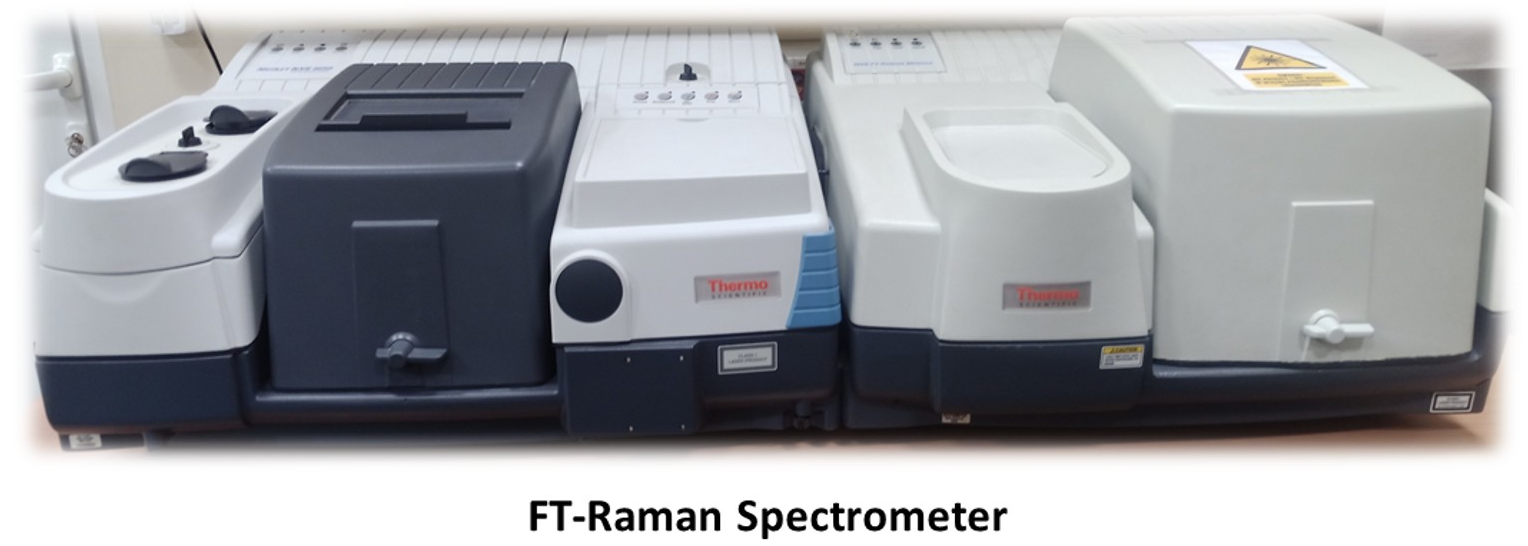
Nicolet NXR 9650 FT-Raman Spectrometer
(Thermo Fisher Scientific, Waltham, MA, USA)
The FT-Raman spectrometer is equipped with a MicroStage microscope attachment featuring an automated XYZ stage, which enables point measurements, line scans, and full surface mapping. A built-in 50× video camera provides real-time visualization of the sample, ensuring precise positioning during analysis. The system operates under OMNIC software, offering full control of measurement parameters, live signal monitoring, and advanced data processing capabilities. Excitation is provided by an Nd:YVO₄ laser with adjustable power from 5 to 2000 mW at a wavelength of 1064 nm, with selectable laser spot sizes of 50 μm – 1 mm. The instrument uses a sensitive InGaAs detector covering a spectral range of 3700–150 cm⁻¹. High spectral resolution and stability are ensured by a Michelson interferometer with a dynamic alignment system, delivering a resolution of 0.09 cm⁻¹ and a wavelength accuracy of 0.01 cm⁻¹.
This setup supports a wide range of applications, including qualitative and quantitative analysis of organic and inorganic materials, studies of polymers and elastomers, characterization of pigments, paints, and binders, analysis of pharmaceutical and cosmetic products, as well as investigations of biological tissues and their components.
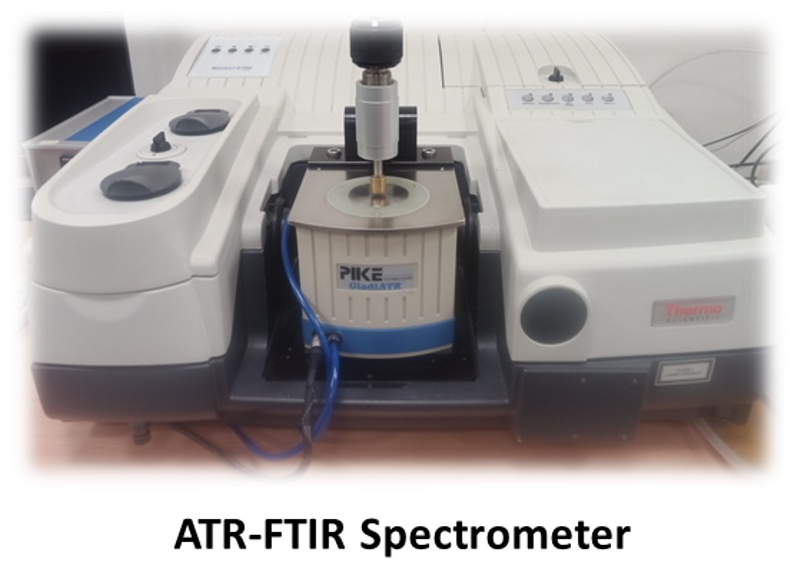
Nicolet 6700 FTIR Spectrometer
(Thermo Fisher Scientific, Waltham, MA, USA)
The Fourier transform infrared (FTIR) spectrometer is equipped with an ATR attachment featuring diamond and germanium crystals, along with a Pike GladiATR electrically heated plate and a Gateway multi-reflection heated platform. This configuration enables precise infrared measurements under controlled thermal conditions and supports both single-reflection and multi-reflection modes for a wide range of sample types. The system is fitted with a DLaTGS detector covering the spectral range of 7800–350 cm⁻¹ and offering a resolution of 0.09 cm⁻¹. The temperature-controlled ATR module allows measurements between 20 and 250°C, enabling in-situ studies of thermally induced processes and temperature-dependent spectral changes.
The instrument is suitable for qualitative and quantitative analysis of organic and inorganic substances, monitoring the progress of chemical reactions, investigations of biological materials including secondary protein structure analysis, as well as studies of thin layers of polymers, rubbers, greases, and gels.
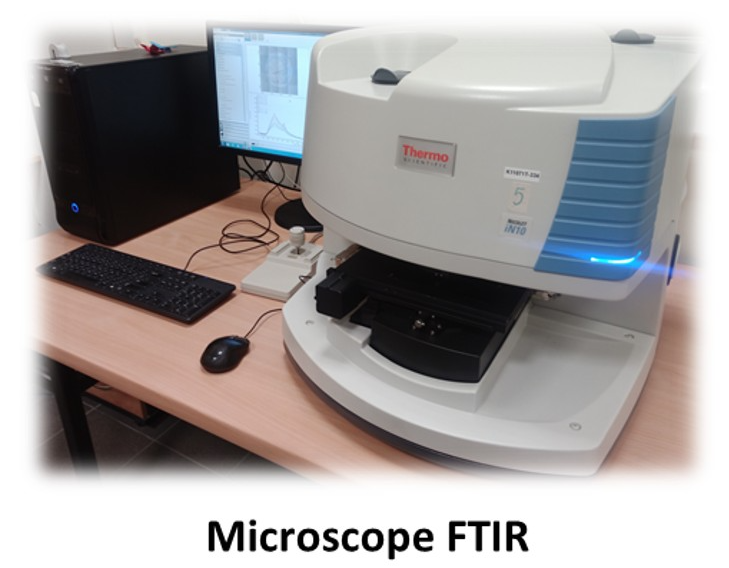
Microscope FTIR iN10
(Thermo Fisher Scientific, Waltham, MA, USA)
The Fourier transform infrared (FTIR) spectrometer is equipped with an ATR attachment featuring diamond and germanium crystals, along with a Pike GladiATR electrically heated plate and a Gateway multi-reflection heated platform. This configuration enables precise infrared measurements under controlled thermal conditions and supports both single-reflection and multi-reflection modes for a wide range of sample types. The system is fitted with a DLaTGS detector covering the spectral range of 7800–350 cm⁻¹ and offering a resolution of 0.09 cm⁻¹. The temperature-controlled ATR module allows measurements between 20 and 250°C, enabling in-situ studies of thermally induced processes and temperature-dependent spectral changes.
The instrument is suitable for qualitative and quantitative analysis of organic and inorganic substances, monitoring the progress of chemical reactions, investigations of biological materials including secondary protein structure analysis, as well as studies of thin layers of polymers, rubbers, greases, and gels.
Microscopy Lab
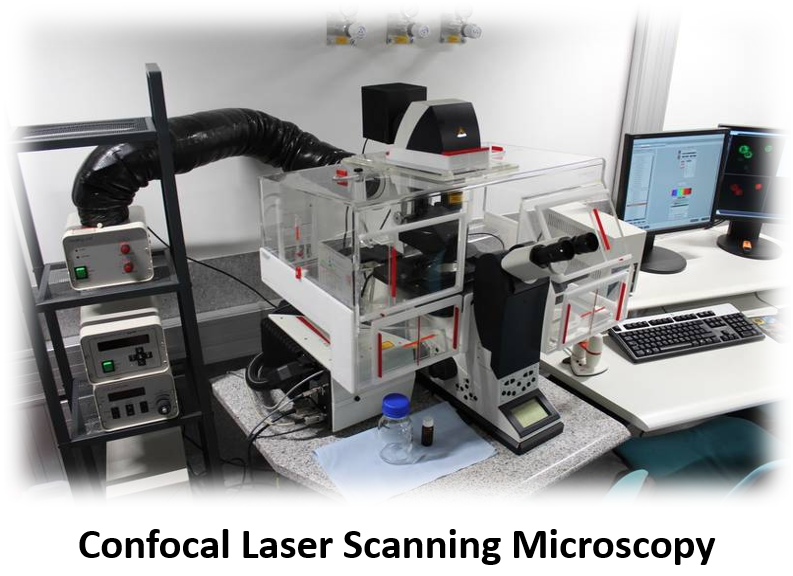
Confocal Laser Scanning Microscopy TCS SPE
(Leica Microsystems, Wetzlar, Germany)
The TCS SPE confocal laser scanning microscope is designed for high-resolution optical sectioning and three-dimensional imaging of biological and material samples. The system is equipped with four diode lasers (405, 488, 532, and 647 nm), enabling multi-channel fluorescence imaging and precise excitation of a wide range of fluorophores. An environmental control chamber provides stable conditions for live-cell and long-term functional studies, with regulation of temperature, CO₂ concentration, and humidity.
The instrument supports high-sensitivity spectral detection, fast scanning, z-stack acquisition, and time-lapse imaging, making it well suited for advanced visualization of cellular structures, biomaterials, and complex 3D systems.
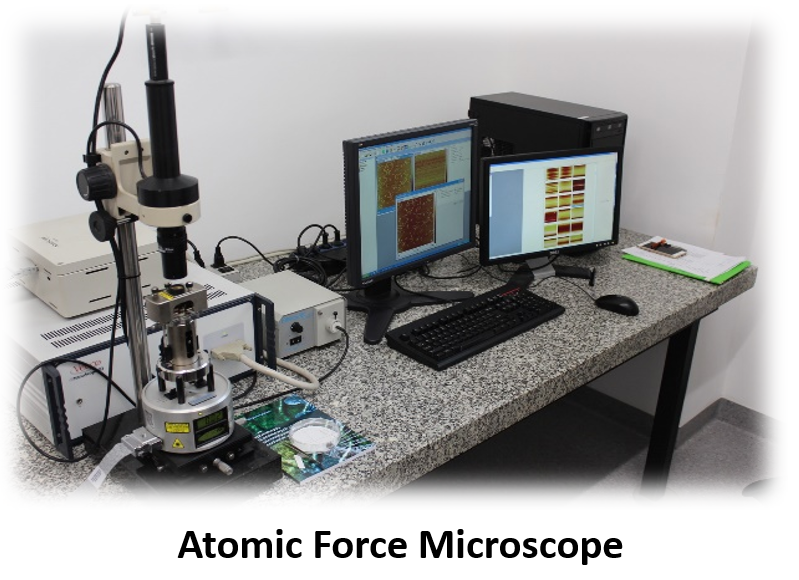
NanoScope 3D IIIa MultiMode Atomic Force
(Brucker, Billerica, MA, USA)
The MultiMode NanoScope 3D IIIa atomic force microscope enables high-resolution surface topography and nanomechanical characterization of a wide range of materials. The system is equipped with a piezoelectric scanner (model E) offering a maximum scan range of 10 µm × 10 µm. The AFM employs a range of cantilevers, chosen to provide the optimal combination of resonance frequency, spring constant, and a tip radius required for specific experimental applications. MultiMode microscope is controlled through the NanoScope IIIa controller operated via NanoScope v6.13 software. An integrated optical microscope (Fiber-Lite PL-800) supports precise positioning and surface approach.
This configuration enables high-quality imaging of biological samples and nanoscale surface features.
Airstream Class II Biological Safety Cabinet
(Airstream, Esco Lifesciences, Singapur)
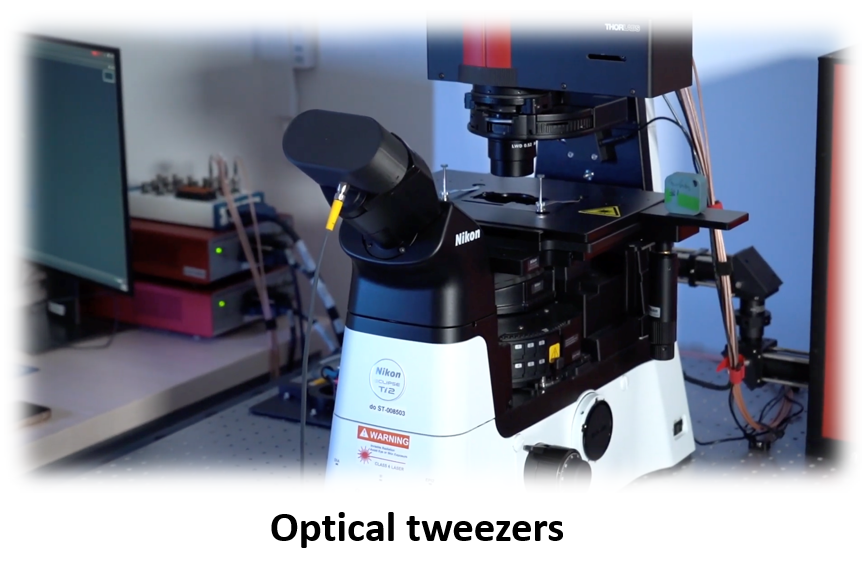
The laboratory hosts a custom-built optical tweezers system based on a Thorlabs platform, designed specifically for precise manipulation of microscopic objects and single particles. The setup uses a Nd:YAG 1064 nm laser as the trapping source and can generate from two to several independent optical traps simultaneously. This allows controlled manipulation and stretching experiments on cells, biomolecules, and soft materials.
The system is suitable for studies in biophysics, soft matter, mechanobiology, and microscale manipulation.
Cell Culture Lab
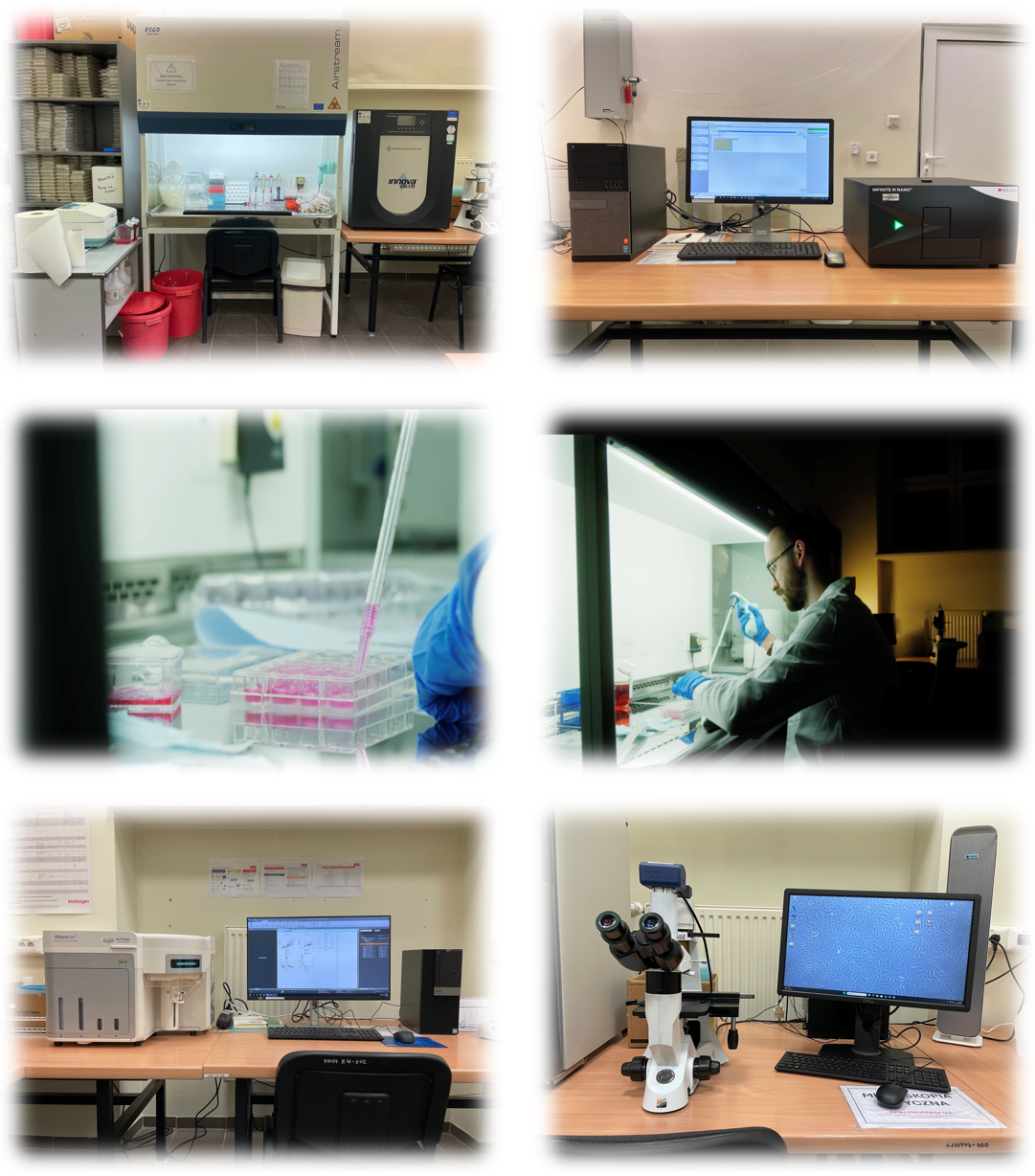
Airstream Class II Biological Safety Cabinet
(Airstream, Esco Lifesciences, Singapur)
Innova CO-170 CO₂ Incubator
(New Brunswick Scientific, Edison, NJ, USA)
MBI 100T Inverted Microscope with Gryphax Subra Camera
(mikroLAB, Lublin, Poland; Jenoptik AG, Jena, Germany)
Airstream class II BSC ensure safe and contamination-free handling of cell cultures, while a CO₂ incubator provides stable temperature, humidity, and gas conditions essential for long-term cell maintenance. Routine observation and assessment of cell morphology are carried out using an inverted microscope designed for culture applications equipped with a high-resolution camera.
Infinite M Nano+ Microplate Reader
(Tecan, Mannerdorf, Switzerland)
For functional and quantitative assays, the laboratory is equipped with microplate reader, enabling absorbance, fluorescence, and luminescence measurements across a broad range of biochemical and cell-based assays.
Attune NxT Flow Cytometer
(Thermo Fisher Scientific, Waltham, MA, USA)
Advanced multiparametric cell analysis is supported by the Attune NxT flow cytometer featuring 405, 488, and 647 nm excitation lasers and enabling precise characterization of cell populations, immunophenotyping, viability studies, and high-throughput sample processing.
Countess 3 Automated Cell Counter
(Thermo Fisher Scientific, Waltham, MA, USA)
Cell counting and viability assessment are performed using the automated system.
other laboratory equipment
Sample preparation is supported by a dedicated cell-culture centrifuge with interchangeable rotors and adapters (5430R, Eppendorf). Long-term storage of biological materials is ensured through an ultra-low–temperature freezer (ULTF-C74i, Vestfrost), a cryopreservation system (CryoMaster 600, Antech Scientific), and a liquid nitrogen storage unit (CryoTrans 50, Antech Scientific), enabling secure preservation of cell lines and biological samples. The laboratory is further equipped with essential auxiliary instruments, including water baths, refrigerators and freezers, and an autoclave, providing comprehensive support for routine and specialized cell culture workflows.